Mobile Betting Cross-Promotions Spark Player Shifts from Poker Tournaments to Roulette Wheels
Written by Gisela Perry · Oct 20, 2026

Mobile Betting Cross-Promotions Spark Player Shifts from Poker Tournaments to Roulette Wheels
Player movement between poker tournaments and roulette wheels has accelerated in smartphone betting environments where cross-promotions link the two formats through shared rewards and seamless app navigation, and data from October 2026 indicates that operators have recorded increased session overlaps as users complete poker events then transition directly into roulette play using the same bonus credits.
Tracking Migration Patterns in Smartphone Platforms
Figures released by the New Jersey Division of Gaming Enforcement reveal that mobile poker tournament participation rose 18 percent year-over-year through mid-2026 while roulette wheel sessions grew 24 percent in the same period, and analysts attribute part of this divergence to integrated promotional mechanics that award poker points redeemable for roulette spins within the same application ecosystem. Observers note that users who finish multi-table poker events often receive targeted roulette incentives within minutes, which shortens the gap between one activity and the next without requiring separate logins or wallet transfers.
Case studies compiled by researchers at the University of Nevada, Las Vegas document how loyalty tiers built during poker play carry over to roulette tables, allowing accumulated rakeback to convert into enhanced wheel multipliers, and this linkage has produced measurable upticks in roulette volume among previously poker-only accounts. Those who study these interfaces report that push notifications timed immediately after tournament conclusions prompt users to open roulette tables, resulting in average session extensions of 12 to 15 minutes per player.
Mechanics of Cross-Promotional Integration
Cross-promotions operate through algorithmic triggers that detect poker tournament completion and immediately surface roulette-specific offers, such as deposit matches valid only on wheel games or free spin bundles tied to final table finishes, and operators have refined these systems to personalize offers based on historical bet sizes from both formats. Data shows that when promotions connect poker and roulette directly, the conversion rate from one game type to the other climbs above 35 percent within the first hour after a tournament ends.
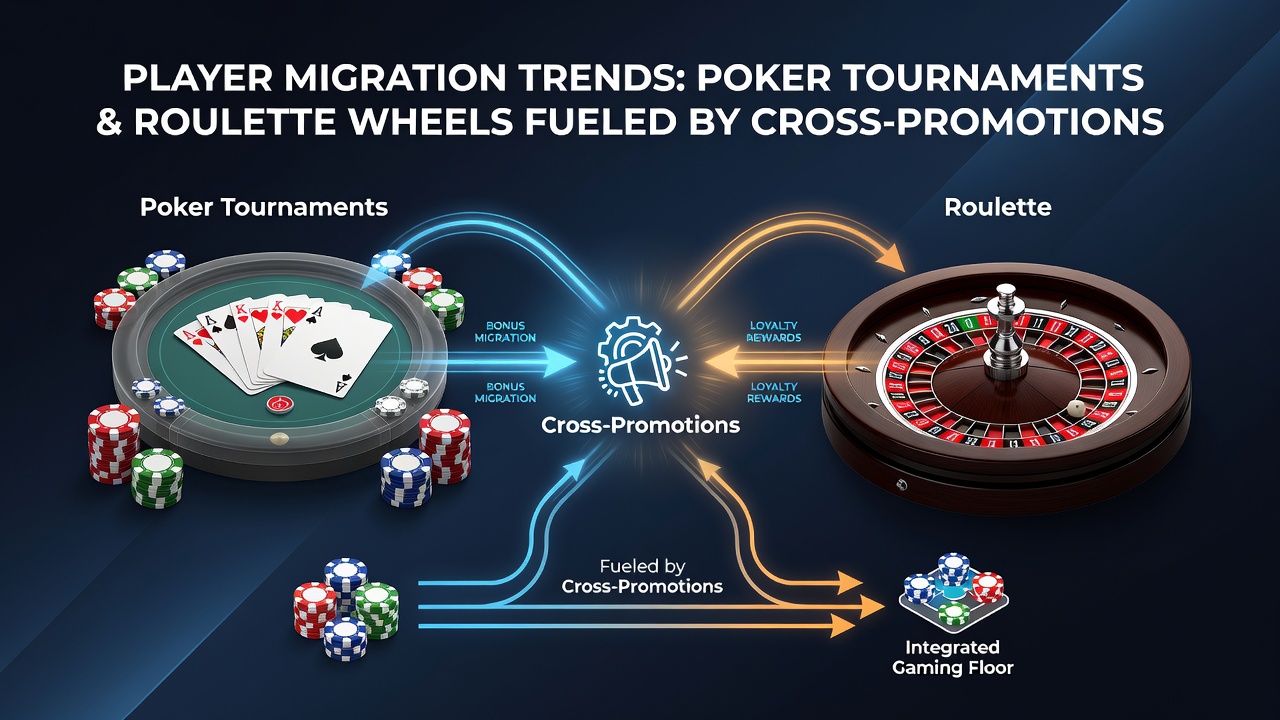
Platform developers have embedded unified leaderboards that combine poker earnings with roulette outcomes, and this design encourages continued engagement across both verticals while users chase combined ranking rewards. In October 2026, several major smartphone operators expanded these shared progression systems to include weekly challenges that require alternating between tournament poker and roulette spins, further embedding the migration pathway into daily user routines.
Regional Data and Platform Variations
Reports from Canadian provincial regulators indicate similar patterns in Ontario-licensed apps, where cross-promotional bundles linking poker MTTs to European roulette variants have driven a 21 percent increase in multi-game daily active users since the start of 2026. European operators have adopted comparable mechanics, though they emphasize video roulette over live dealer formats to accommodate faster transitions from poker sessions. Australian state gaming authorities have noted parallel trends in New South Wales and Victoria, where promotional credits earned in poker tournaments frequently migrate to roulette wheels during evening peak hours.
These regional differences highlight how regulatory frameworks shape the speed and visibility of cross-promotions, yet the underlying migration effect remains consistent across markets that permit integrated smartphone betting. Platform data further demonstrates that users who engage with at least one cross-promotion per week show a 40 percent higher retention rate than those who stay within a single game type.
Conclusion
Cross-promotions continue to reshape how players move between poker tournaments and roulette wheels inside smartphone environments, and the patterns observed through October 2026 suggest these mechanics will keep influencing session composition as operators refine reward pathways. The measurable shifts documented by regulatory bodies and academic researchers underscore the growing interconnection of game formats within unified mobile ecosystems.